
Prepare to raise | CORE
Expert guidance, investor matching, and visibility
Private rounds
Raise from your network with professional infrastructure
Cap table & equity management
All-in-one equity and stakeholder management
ESOP
Incentivize your employees and manage ESOPs seamlessly
Explore SeedBlink Legal

Investments
Thinking about becoming an angel investor? Discover how to evaluate CEE startup opportunities, build your investment thesis, diversify your portfolio, and source stronger deals.
October 21, 2026
·
5
min read

Central and Eastern Europe’s startup ecosystem has evolved significantly over the past decade. What was once viewed primarily as a source of technical talent and outsourced development has matured into a region producing globally competitive companies and sophisticated startup ecosystems.
Alongside this evolution, access to startup investing has also become more accessible to individual investors. Angel investing is no longer limited to a small group of experienced venture capital professionals; operators, founders, executives, and private investors are looking at startups as a way to participate in high-growth opportunities earlier in the company lifecycle.
However, investing in startups requires a different mindset from traditional investing. Building a portfolio, sourcing high-quality opportunities, and understanding early-stage dynamics can significantly affect long-term outcomes.
This guide explores the fundamentals of becoming a first-time angel investor in CEE and outlines key principles for building a thoughtful, diversified startup investment strategy.
CEE startups are becoming an attractive investment opportunity as they combine stronger funding velocity with a maturing innovation ecosystem. In 2025, startups across Central and Eastern Europe raised €2.3B in venture capital, up from €1.7B in 2024, with recovery driven largely by larger growth-stage rounds.
The region has also built a sizable innovation pipeline, with more than 4,000 startups and over 360 scaleups now active across the ecosystem. This depth creates opportunities across multiple stages of company development and signals that CEE is evolving from an emerging-market opportunity into a more established, scalable technology ecosystem.
What makes the region particularly attractive is its ability to generate strong outcomes with comparatively less capital. The CEE ecosystem has reached an estimated €274B in enterprise value and has produced nearly 70 unicorns and billion-dollar exits, including eight new additions since 2025. Startups in the region also begin outperforming the broader European average from Series C onward, indicating stronger capital efficiency and resilience at scale.
At the same time, investment is shifting toward higher-growth sectors: AI accounted for 52% of VC investment in 2025, while deep tech represented 37%, more than twice its prior share. This combination of capital efficiency, proven exits, and exposure to frontier technologies creates an attractive profile for investors seeking underpenetrated markets with significant upside potential.
Romania is becoming a dynamic growth story in the CEE startup landscape, moving from an outsourcing-driven technology market toward a more mature innovation ecosystem. Bucharest alone has reached approximately $12.3B in combined startup enterprise value, supported by nearly 300 tracked startups and a strong growth trajectory.
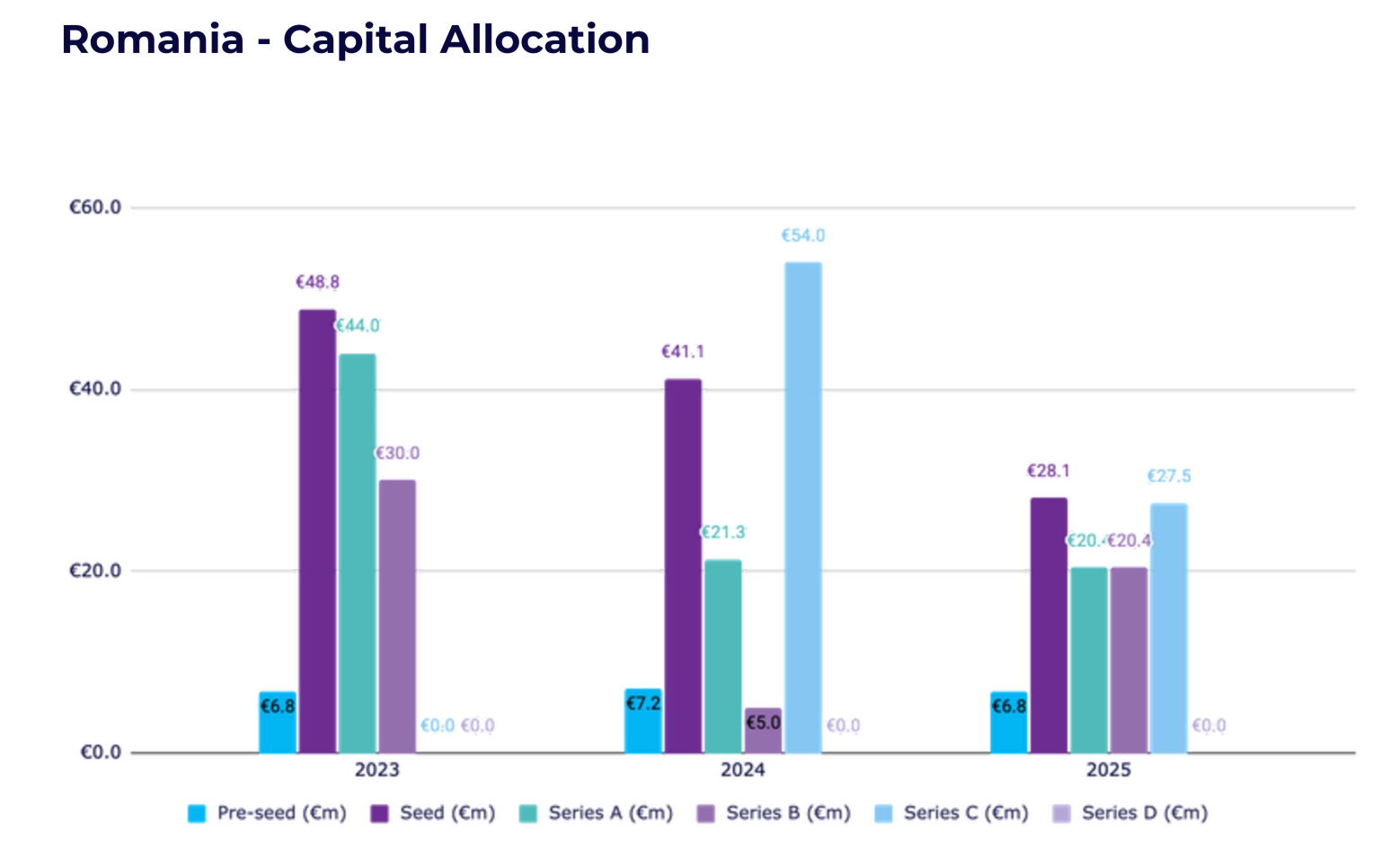
Although investment volumes declined in 2025 to €103M across 40 transactions, the country maintains a relatively balanced funding profile between early-stage and growth capital, suggesting the ecosystem continues to mature. Investor sentiment also points toward increased activity in strategic sectors such as defense technology, cybersecurity, semiconductors, and AI infrastructure, reflecting a shift toward more globally relevant technology segments.
Beyond funding metrics, Romania’s ecosystem continues to benefit from deep technical talent and an international mindset. Industry leaders in the report highlight a new generation of founders pursuing larger and more ambitious opportunities, both domestically and across the diaspora.
This evolution positions Romania not only as a source of engineering talent but as an ecosystem gradually building the conditions necessary to create larger-scale regional and global technology companies.
Poland has reinforced its role as the leading scale-up engine in Central and Eastern Europe, attracting €787M across 182 transactions in 2025, representing more than 20% of all capital invested in Eastern Europe. Larger rounds from companies such as ElevenLabs and ICEYE fueled growth, highlighting Poland’s ability to build globally competitive businesses.
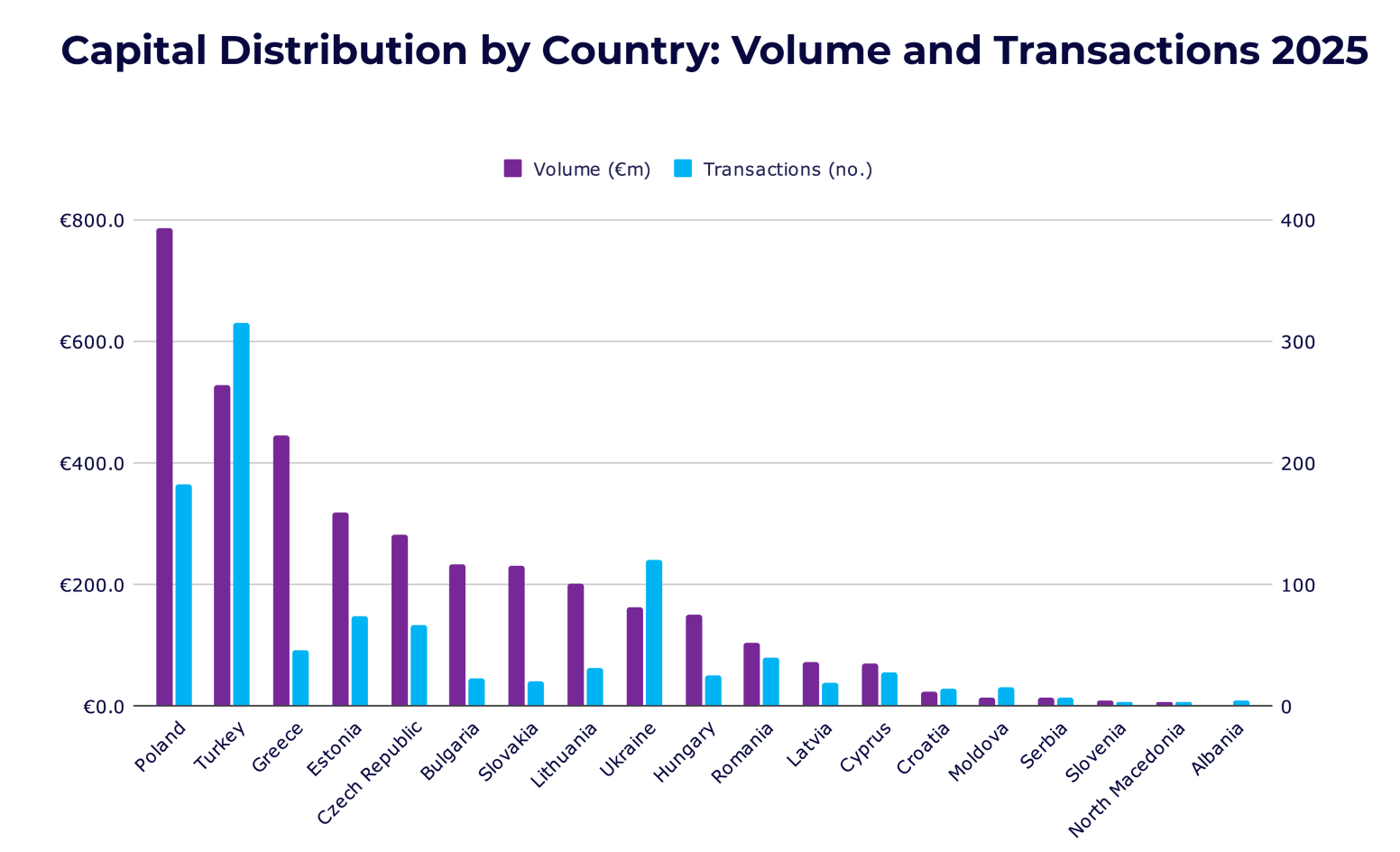
The local ecosystem also showed strong momentum in later-stage financing, with about 68% of capital directed toward growth-stage companies, reflecting maturity and the ability to support startups beyond early funding rounds.
Poland’s strength extends beyond a few recent success stories. The ecosystem benefits from a large and diversified startup base, growing investor participation, and stronger conversion of early-stage companies into scaleups.
For first-time angel investors, success rarely comes from identifying a single “future unicorn.” Startup investing follows a fundamentally different return pattern from traditional public markets because returns typically follow a power-law distribution: a very small number of investments generate a disproportionate share of overall portfolio performance.
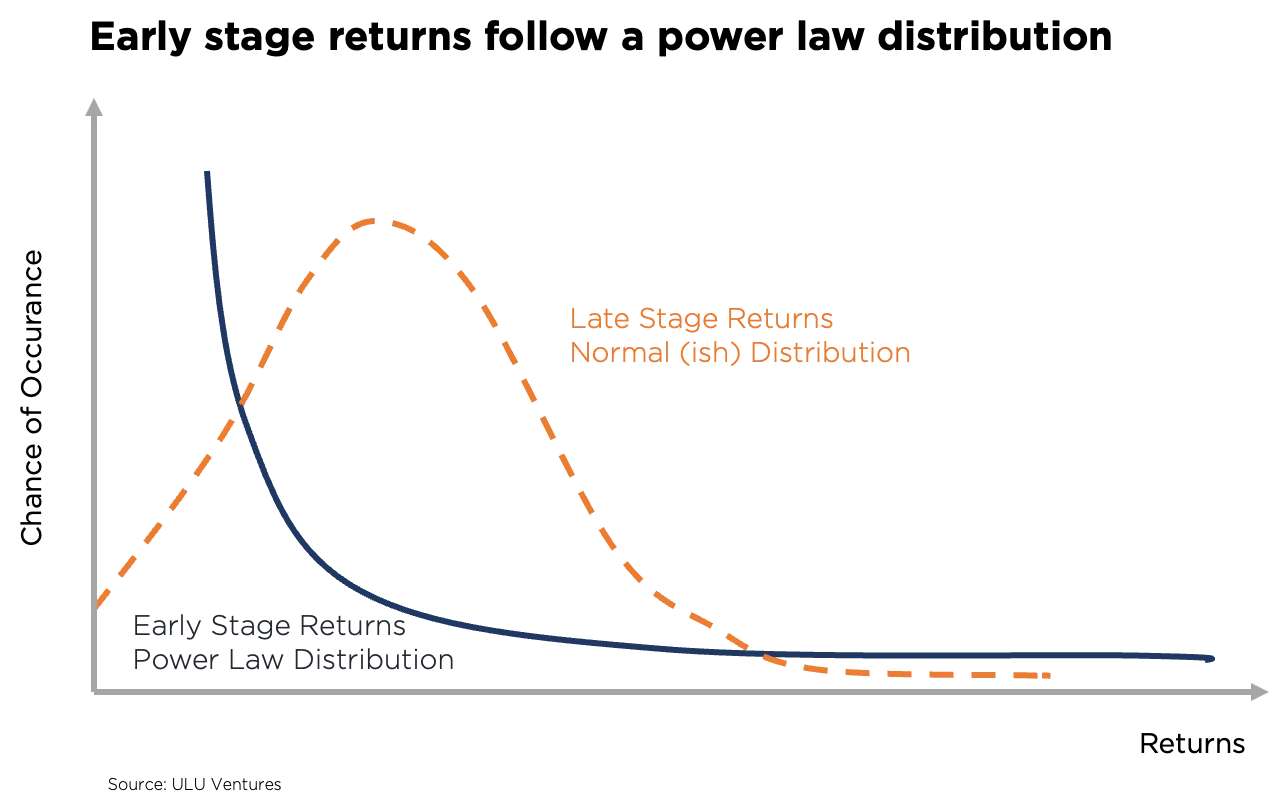
In practice, many startups may return modest gains, some may fail entirely, and only a handful can generate outsized outcomes that compensate for the rest of the portfolio. This dynamic is especially relevant in CEE, where the ecosystem continues producing high-growth companies across sectors such as AI, deep tech, enterprise software, and fintech, but where identifying tomorrow’s category winner at the earliest stage remains highly uncertain.
This is one of the main reasons why concentration risk can become a major challenge for new angel investors. In public markets, returns are generally distributed across many mature companies with broad liquidity and established performance histories. Startup investing works differently: businesses are private, outcomes are uncertain, and value creation tends to happen over much longer time horizons.
Rather than trying to identify a single breakout success, investors should approach startup investing as a portfolio exercise built around probability and diversification. The objective is not to predict a single winner with perfect accuracy; it is to create sufficient exposure to high-quality opportunities so that potential outliers can emerge naturally over time.
A common mistake among new angels is deploying too much capital into one or two companies. While the exact number depends on available capital, many experienced investors often build exposure gradually across 10–20 startups over several years, rather than concentrating on a small number of investments.
A portfolio of this size improves the probability of capturing exceptional performers while reducing the impact of individual company failures. Building diversification over time also lets investors develop pattern recognition, refine investment criteria, and improve decision-making with experience.
Many first-time angels invest their entire allocation upfront, leaving little flexibility for future rounds. A more disciplined strategy is to divide capital between initial investments and follow-on reserves. Initial checks provide broad portfolio exposure, while follow-on capital lets investors increase positions in companies that demonstrate strong traction and execution over time.
For example, an investor might allocate 50–70% of available capital to initial investments and reserve 30–50% for follow-ons. This approach lets investors support emerging winners rather than simply maintain exposure to underperforming companies.
The strongest angel investors build systematic sourcing strategies that keep them close to founders, investors, and startup communities before companies become widely visible. In CEE, where many of the highest-performing startups raise capital through close-knit ecosystems and referrals, early access can be a meaningful advantage.
Rather than relying on a single channel, experienced angels build diversified sourcing pipelines across networks, accelerators, co-investments, events, and personal relationships.
Angel networks are often one of the most effective starting points for investors looking to build deal flow in CEE. These communities provide access to curated opportunities, shared due diligence, and experienced investors who can offer sector expertise and local market insights. They also help investors establish relationships that become valuable over time.
The breadth of ecosystems across Europe also creates opportunities to access different startup profiles and sectors. We’ve put together a collection of guides featuring the most active European angel networks, including Romania, Poland, Switzerland, Spain, Austria, Greece, Germany, Georgia, and North Macedonia, each with different levels of maturity and sector strengths.
Accelerators can provide startups with access before they begin attracting larger institutional funding rounds. Companies emerging from accelerator programs have typically already undergone initial screening, mentorship, and product validation, creating an earlier point of entry for investors. Following accelerator cohorts can also help identify broader ecosystem trends and emerging sectors before they become widely recognized.
The accelerator landscape across CEE and neighboring ecosystems is diverse, and we’ve mapped out programs across Romania, Poland, Switzerland, Greece, Georgia, Bulgaria, Hungary, Austria, and North Macedonia.
Explore accelerator ecosystems and startup programs
Co-investing alongside venture capital firms can add signal when evaluating startup opportunities. VC investors often conduct extensive due diligence around technology, market dynamics, competitive positioning, and founder quality before committing capital.
While institutional participation should not replace independent analysis, it can help angels gain access to stronger opportunities and benefit from more structured investment processes.
Many high-quality investment opportunities originate from relationships built before a company formally enters fundraising. Startup conferences, pitch competitions, demo days, and ecosystem gatherings provide access to founders and investors at much earlier stages.
Check out top events to attend in 2026
As investors spend more time in startup ecosystems, their own networks often become one of their most valuable sourcing channels. Founders, operators, portfolio companies, and other investors frequently become recurring sources of trusted referrals.
Building a diversified angel portfolio is easier when investors can combine their networks, expertise, and capital. This is where investment syndicates can be a better solution.
A syndicate lets an experienced investor or community leader bring other investors into a startup opportunity they sourced and evaluated. Instead of every angel building deal flow entirely on their own, investors can participate alongside a lead who brings access to the opportunity and helps coordinate the investment.
For investors, this can mean access to opportunities that might otherwise be difficult to reach, while making it easier to diversify across more companies. For syndicate leads, it creates a way to bring their investor community into deals and consolidate participation through a more structured process.
SeedBlink Syndicates brings this model into one infrastructure, helping syndicate leads and investors manage the investment process from opportunity to execution. Whether you want to participate in deals led by experienced investors or bring your own community together around an investment, syndication can turn individual deal flow into shared access.
Written by

Patricia Borlovan
Communication Specialist
TABLE OF CONTENT

Subscribe to our newsletter
No spam. Just the latest releases and tips, interesting articles, and exclusive interviews in your inbox every week.
Share this article


