Prepare to raise | CORE
Expert guidance, investor matching, and visibility
Private rounds
Raise from your network with professional infrastructure
Cap table & equity management
All-in-one equity and stakeholder management
ESOP
Incentivize your employees and manage ESOPs seamlessly
Explore SeedBlink Legal

Subscribe to our newsletter
Share this term
When companies want to raise money without taking on traditional debt, they sometimes offer preferred shares as a middle-ground option. Investors who buy them are usually looking for income and a bit more security than they’d get from regular stock.
You’ll often find preferred stock used by firms that value predictable financing and want to attract investors who enjoy dividend income without the ups and downs of common-stock ownership. It’s a way for businesses to secure capital while giving investors a clearer idea of what they can expect in return.
Many big names issue these types of securities. For example, Bank of America has multiple preferred stock series, like Series E and Series F, that pay fixed or floating dividends.
In practice, preferred stock fits neatly into real-world portfolios as a steady source of income. Since it combines the predictable payouts of bonds with some growth potential from equities, investors often use it to balance risk and reward.
By adding preferred stock to a diversified portfolio, investors can smooth volatility, increase income, and maintain some exposure to the stock market’s long-term growth, making it a valuable middle ground between conservative bonds and riskier equities.
Preferred stock is a hybrid security because it shares features of both stocks and bonds. Like a bond, it pays regular dividends, usually at a fixed rate, and those payments come before any dividends go to common shareholders.
This type of stock gives preferred investors more predictable income and a higher claim in the event of bankruptcy. However, unlike bondholders, preferred shareholders still own part of the company, so they can benefit if the business performs well, though they usually don’t have voting rights.
From a company’s perspective, preferred stock is a flexible way to raise capital without taking on traditional debt. It helps balance their financing between loans, bonds, and common equity. For investors, preferred shares are often seen as an income-focused investment, offering higher yields than most bonds and more stability than regular stocks.
For investors seeking consistent preferred stock dividends and lower volatility than regular stocks, preferred shares can be a useful middle ground in a well-balanced portfolio.
For established corporations, issuing preferred shares is a way to attract investors without giving up control through voting rights, while still offering those investors steady dividends and a higher claim on company assets.
In the startup world, preferred stock is common in early financing rounds like Series A, where venture capital firms invest in exchange for special privileges such as priority on dividends and repayment if the company is sold or goes under.
These shares often come with additional rights, such as anti-dilution protection or conversion options that allow investors to later swap their preferred shares for common stock if the company succeeds. This structure gives startups access to the capital they need to grow, while providing investors with both protection and potential upside.
Buying preferred stock is straightforward and can be done in several ways. The most common method is through a regular brokerage account, where investors can search for and purchase individual preferred shares just like common stocks.
For those who prefer instant diversification rather than picking individual stocks, exchange-traded funds (ETFs) like the iShares Preferred & Income Securities ETF (PFF) or the Invesco Preferred ETF (PGX) bundle many preferred shares into a single investment, offering broad exposure and steady income.
Some companies also allow investors to buy preferred stock directly through their investor relations departments or dividend reinvestment plans (DRIPs), which can be a good option for long-term holders. No matter the method, investors should check the dividend rate, credit rating, and call features before buying, since these details affect both income potential and risk.
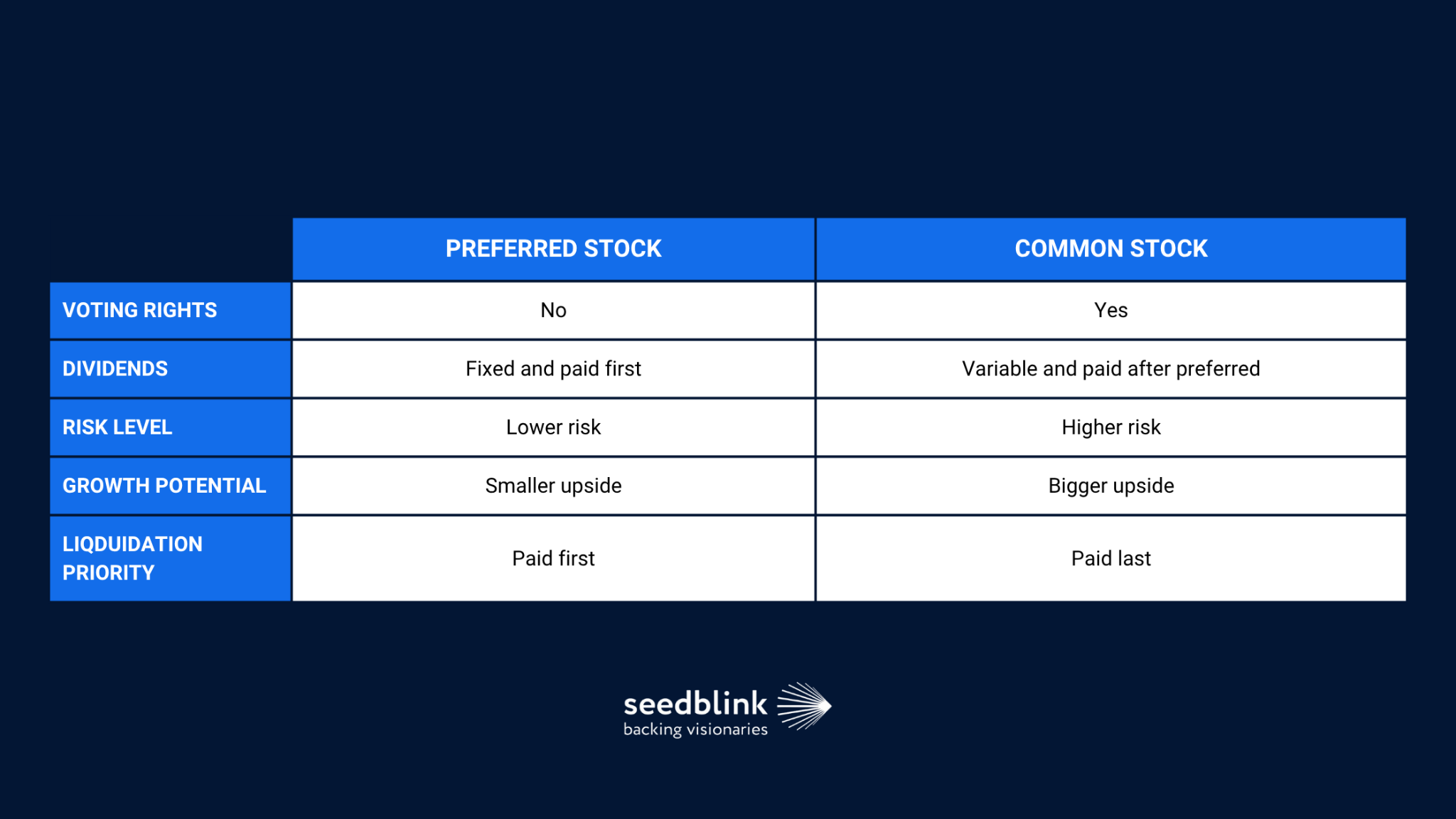
When you look at preferred stock vs. common stock, the main difference is how investors get paid and how much control they have. Common stock gives you ownership in a company and the right to vote on major decisions, like choosing the board of directors.
It also comes with more risk; if the company does poorly, you’re the last to get any payout. But if the company grows, common stockholders can see bigger rewards through rising share prices and possibly higher dividends.
Preferred stock, on the other hand, doesn’t usually come with voting rights, but it offers steady, fixed dividends that are paid out before any common stock dividends. It’s more stable, which makes it popular with investors who want consistent income instead of big growth.
If the company shuts down or goes bankrupt, preferred shareholders are also first in line to get their money back before common shareholders. In short, preferred stock is about steady income and safety, while common stock is about growth and control.
There are several preferred stock types, each offering different benefits for investors and companies. The most common is cumulative preferred stock, which means if a company skips a dividend payment, that unpaid amount carries over and must be paid before any dividends go to common shareholders. It provides investors with additional protection and more reliable income.
Non-cumulative preferred stock is the opposite; if a dividend is missed, it’s gone for good, and investors can’t claim it later. These are riskier but may offer slightly higher yields to compensate.
Another popular type is convertible preferred stock, which allows investors to exchange their preferred shares for common shares at a set price. This option is appealing if the company grows quickly because it allows investors to switch to common stock and benefit from price increases.
Callable preferred stock gives the company the right to repurchase the shares after a specified date, usually at a set price, allowing it to refinance if interest rates drop or its financial situation improves.
Lastly, participating preferred stock not only pays its fixed dividend but may also pay additional dividends if the company earns higher profits or declares bonuses for common shareholders.
Companies issue preferred stock to raise money without losing control of their business. Because preferred shares usually don’t carry voting rights, companies can attract new investors while retaining decision-making power with the founders or current owners.
Another reason is that preferred stock appeals to investors seeking steady income from fixed dividends. It also helps the company’s balance sheet, since it counts as equity rather than debt, which keeps borrowing options open.
You’ll often see preferred stock financing used by large corporations and in venture capital funding rounds such as Series A or Series B. It gives companies the cash they need while offering investors a safer, more reliable return.
In startup funding, preferred stock is common in early rounds such as Series A. Startups use it to attract venture capital firms that want to invest but also want some protection.
Preferred shares usually come with liquidation preference, meaning investors get their money back before common shareholders if the company is sold or shuts down. They can also include conversion rights, which allow investors to convert their preferred shares into common stock later, especially if the company grows or goes public.
When it comes to who buys preferred stock, the main investors are usually large financial institutions and individuals seeking steady income. Institutional investors, such as insurance companies, pension funds, and mutual funds, often buy preferred shares because they offer reliable dividends and lower risk than common stocks. These steady payments make preferred shares a great match for investors who need predictable cash flow to meet their financial obligations.
Private equity and venture capital firms also invest in preferred stock, especially in startups, because it gives them special rights, such as dividend priority and protection if the company is sold or goes under.
For individual, income-focused investors, preferred stock is attractive because it provides higher dividend yields than most bonds and is less volatile than regular stocks. While preferred shares may not grow as quickly as common stocks, they offer greater stability and more consistent returns, making them a favorite among long-term investors who value reliability over rapid gains.
Advantages:
Disadvantages:
Advantages:
Disadvantages:
Can be expensive: Preferred dividends aren’t tax-deductible, making this type of financing costlier than loans.
1. Can preferred stock prices go up or down?
Yes, preferred stocks can rise or fall in value, though they’re usually less volatile than common stocks. Their price often depends on interest rates, dividend yield, and the credit quality of the issuer. When rates rise, the value of preferred shares may decline because new fixed-income investments may offer higher returns.
2. What’s the difference between cumulative and non-cumulative preferred stock?
With cumulative preferred stock, any unpaid dividends carry over, meaning the company must pay them before common shareholders receive anything. Non-cumulative preferred stock doesn’t work that way; if the company skips a dividend, it’s gone for good.
3. Can preferred stock be converted into common stock?
Yes. Convertible preferred stock gives investors the option to exchange their preferred shares for common shares at a later date, usually at a fixed conversion ratio or par value. This feature, called convertibility, can be valuable if the company’s stock price increases.
4. Is preferred stock risky?
All investments involve risk, but preferred stock generally carries less risk than common stock. The main risk associated with preferred stock comes from interest rate changes, company performance, or missed dividends. Even so, preferred shares offer more price stability and predictable annual dividends, making them popular with income-focused investors.
5. How often are dividends paid?
Preferred stock dividends are usually paid quarterly, though some issuers pay monthly or annually. These payments are typically based on the stock’s par value and remain fixed, helping investors plan steady income.
6. Can companies skip dividend payments?
It depends on the type of preferred stock. Companies that issue cumulative preferred stock must eventually pay any skipped dividends, while non-cumulative preferred shares don’t build up unpaid amounts. The company’s ability to make these payments often depends on profits and cash flow.
7. Is preferred stock a good long-term investment?
Preferred stock can be a solid long-term choice for investors who want stable income and lower volatility. However, because it behaves more like a fixed-income security, it doesn’t offer much capital appreciation. It’s best suited for portfolios focused on dividend income rather than rapid growth.
8. Are preferred stocks good during inflation or rising interest rates?
Not usually. Since preferred dividends are fixed, their yields can become less attractive when inflation or interest rates rise. Some investors choose perpetual preferred stock or callable preferred stock with variable rates to help offset this risk during high-rate periods.